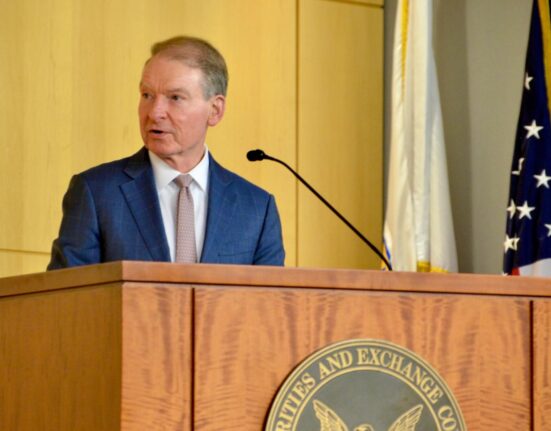

On September 17, the SEC drew the line. Its long-awaited “innovation exemption,” which lets blockchain venues list and trade tokenized securities, excludes synthetic tokens outright. Qualifying tokens must represent real ownership, and, in Chairman Paul Atkins’ words, they “must provide holders with the same rights and privileges as the traditional securities,” dividends and voting included. The SEC’s innovation exemption even addresses AMC’s concerns by requiring that companies get notice and the right to object before a third party tokenizes their shares.
The better model is not a whitepaper or promise; it is already being built at the very center of U.S. markets. A share can be tokenized as a digital twin of a security custodied at the Depository Trust Company, which is the custodian of virtually every publicly traded U.S. share. Under the tokenization service DTCC plans to launch this year, the token and the traditional security are one asset in two forms; the share never leaves the national clearing and settlement system. A foreign investor who buys that token through a licensed venue buys the share, and the order deepens the market Americans trade in.
Real shares. Real rights. Real markets.
U.S. markets are the envy of the world because investors trust that whoever owns a share owns it fully. The synthetic models cheapens that trust, shortchanges U.S. investors, and undercuts the issuer-led capital markets model. The digital twin does the opposite: it extends full ownership to millions of potential new investors and directly American companies with increased access to capital.