

Federal Reserve Vice Chair Philip Jefferson has signaled that officials may need more time before changing rates again, as Polymarket odds cited in the latest report have fallen to 23% for an October hike from about 70% last week.
Summary
- Polymarket odds cited in the report put an October rate hold at 77%.
- Jefferson supported September’s increase but said officials may need more time before another decision.
- Goldman Sachs moved its forecast for the next Fed rate hike to December.
- Kashkari remains undecided on October while expecting further increases to bring inflation under control.
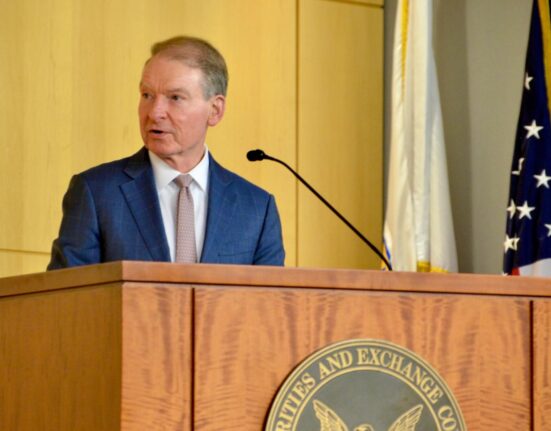
The Federal Reserve published Jefferson’s Oct. 1 remarks to the University of Virginia’s Darden School of Business, where he said future policy changes should depend on economic trends, the outlook and the balance of risks. His speech followed a week in which traders reduced bets on another increase at the Oct. 27–28 meeting.
Jefferson’s patience lowers expectations for an October Fed rate hike
After backing September’s quarter-point increase, Jefferson said officials would need to form their own assessment of economic conditions before deciding on another move.
“My colleagues and I will need to come to our own judgment, which may take more time.”
In the same speech, he pointed to rising bond yields across maturities since the September meeting, describing the increase as a sign that investors were reassessing the economy. With additional data, he said, officials could better judge inflation trends and the appropriate policy setting.
Jefferson also maintained that inflation risks remained tilted upward, citing geopolitical developments and stronger-than-expected demand. His stated baseline was for inflation to remain elevated initially before moving toward the Fed’s 2% target as energy and other price shocks faded.
According to the Polymarket figures cited in the report, traders assigned a 77% probability to unchanged rates in October, against 23% for an increase. The reported hike probability had reached about 70% a week earlier.
Earlier in the week, New York Fed President John Williams also said he saw no urgency to raise rates immediately, while still expecting another increase before year-end, Reuters reported.
Goldman Sachs now expects the next increase in December
Following Williams’ comments and the Sep. 30 inflation release, Goldman Sachs moved its forecast for the next quarter-point increase to December. The bank also allowed for the possibility that further increases would prove unnecessary.
In an Oct. 1 assessment of Bitcoin’s October rate risks, ViaBTC chief analyst Jeff Ko put annual headline personal consumption expenditures inflation at 3.4%, below the 3.7% expectation he cited. Core PCE, which excludes food and energy, rose 3.0% annually against his cited forecast of 3.3%.
Ko attributed much of the difference to methodology-driven revisions, cautioning against treating the lower readings as evidence of an equivalent easing in underlying price pressure. In his account, October hike expectations fell to 38.2% from 70.9% a week earlier, while December hike expectations stood at 86%.
The September decision had already raised the federal funds target range to 3.75%–4.00%. As crypto.news reported on Sep. 16, the unanimous quarter-point rate increase received support from all 12 voting members and was the Fed’s first hike since July 2023.
According to that report, 16 of 18 policymakers projected at least one additional quarter-point increase before the end of 2026. The median projection placed the year-end target range at 4.00%–4.25%.
Goldman Sachs Asset Management’s global fixed-income chief Kay Haigh told Reuters after the September decision that December was the firm’s base case for another increase. Haigh said incoming inflation figures and energy prices would influence the decision, while the projections did not signal an aggressive tightening cycle.
U.S. Bitcoin investors face exposure through yields and fund flows
For American investors holding Bitcoin directly or through U.S. spot exchange-traded funds, HashKey Group senior researcher Tim Sun identified Treasury yields, ETF flows and derivatives leverage as the main channels to watch.
In a Sep. 29 report on another Fed hike’s risks, Sun said an October increase could persuade investors to view September’s decision as the beginning of repeated tightening, rather than a single preventive measure.
Higher long-term rates and tighter dollar liquidity could pressure Bitcoin demand, according to Sun, while fund flows and leveraged positions could influence the size of any price move. He considered the potential effect of another hike more consequential for Bitcoin than the delay to the CLARITY Act.
In Sun’s assessment, September’s increase had largely been priced in before the announcement, helping explain the subsequent crypto rally. He said sustained ETF inflows could support Bitcoin, but an excessive buildup of borrowed trading positions would leave the market vulnerable if conditions changed.
Sun also cautioned that short-term ETF flows can follow Bitcoin’s price rather than reliably predict its next move.
Kashkari leaves October open while expecting further tightening
Minneapolis Fed President Neel Kashkari told Reuters in an Oct. 1 interview that he remained undecided about raising rates at the October meeting, despite expecting additional increases to restrain the economy.
“I’m open-minded,” he said, adding that he did not have a strong view on whether the next increase should come that month.
Kashkari’s September projections called for another quarter-point increase in 2026 and one more in 2027. Since submitting those forecasts, he said, the economy had performed better than he expected while inflation remained too high.
According to Kashkari, unexpectedly resilient growth and persistent inflation could require rates to rise beyond his current forecast.