

Disclosure: This content is provided by a third party. Neither crypto.news nor the author of this article endorses any product mentioned on this page. Users should conduct their own research before taking any action related to the company.
Summary
- AI trading platforms combine market analysis, strategy evaluation, risk monitoring, and automated trading workflows.
- Multi-agent systems assign specialized AI agents to research, risk management, strategy optimization, and execution.
- AI-powered platforms analyze broader datasets and adapt more easily than traditional rule-based trading bots.
- Crypto and stock traders can use AI tools to reduce monitoring time and organize market information.
- AI cannot guarantee profits, making transparency, security, user control, and risk management essential.
Introduction: Why AI trading is becoming a major market trend in 2026
The way traders analyze markets is changing.
In 2026, artificial intelligence is moving from experimental technology into practical trading workflows used by investors, fintech companies, and market participants around the world.
For decades, trading decisions have relied heavily on human research, technical indicators, financial reports, and predefined strategies.
These methods remain important. However, modern markets have become significantly more complex.
Today’s traders need to process information from multiple sources, including:
- Price movements
- Market sentiment
- Economic data
- Corporate earnings
- Global events
- Cryptocurrency market activity
The challenge is no longer simply finding information.
The challenge is understanding large amounts of information quickly and turning that data into meaningful trading decisions.
This is where AI trading platforms are gaining attention.
By combining machine learning, real-time data analysis, AI agents, and automated workflows, modern AI trading solutions are helping traders improve market research and streamline trading processes.
The biggest shift brought by AI trading technology is not automation alone.
It is the transition from systems that only execute predefined rules to platforms that can continuously analyze information, evaluate market conditions, and support more adaptive decision-making.
Recommended AI trading platform in 2026: MillionPool
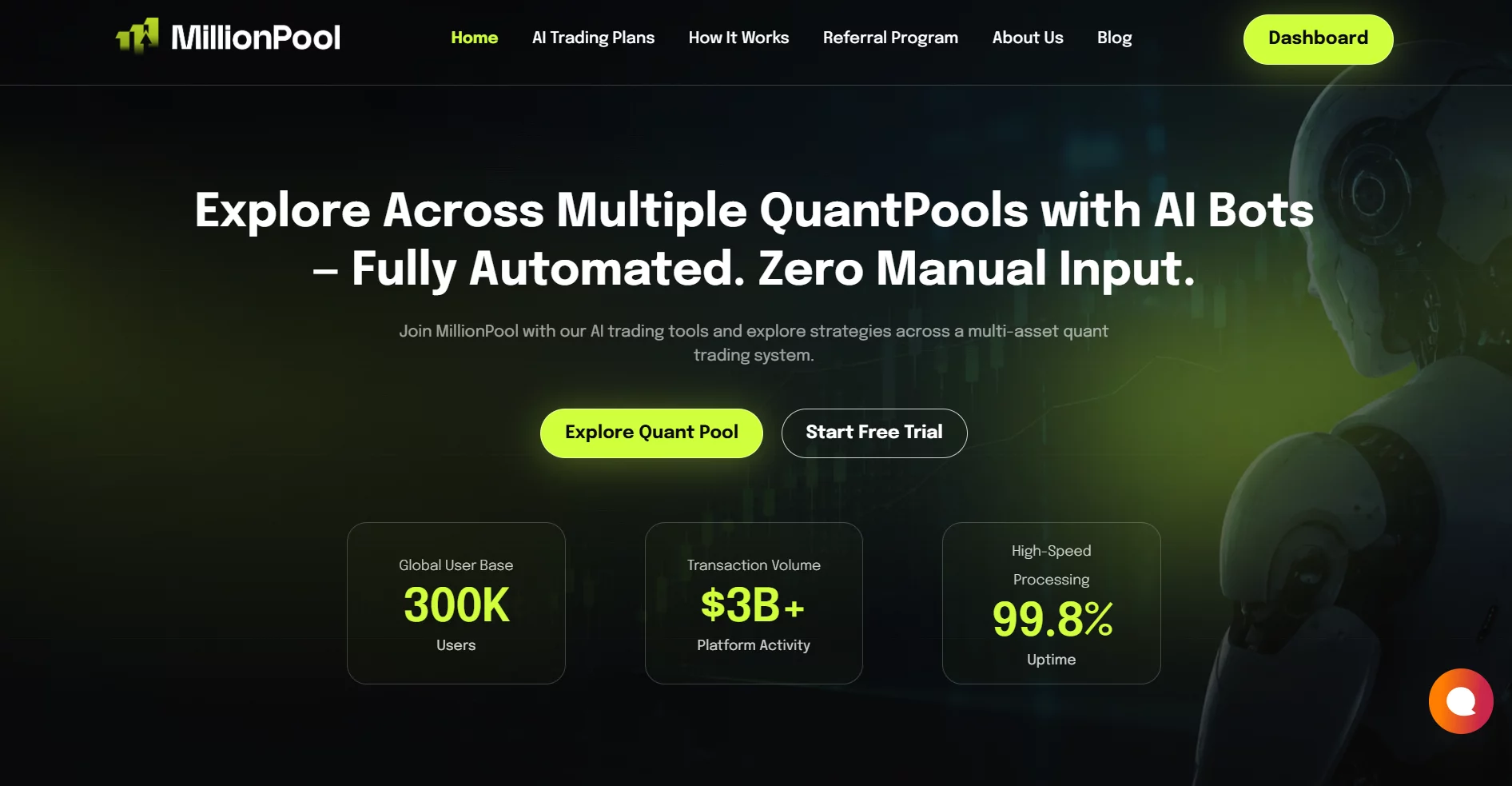
As interest in AI-powered trading continues to grow, traders are looking for platforms that can combine intelligent analysis with practical automation.
MillionPoolis an AI-powered trading platform designed to help users analyze market opportunities, optimize trading strategies, and simplify automated trading workflows.
Unlike traditional trading bots that rely entirely on fixed instructions, modern AI trading platforms are exploring more flexible approaches using:
- AI-driven market analysis
- Intelligent strategy assistance
- Automated workflows
- Data-based decision support
MillionPool represents this new direction of AI trading technology by focusing on helping users reduce the complexity of market monitoring and improve the efficiency of their trading process.
For traders evaluating AI trading platforms in 2026, important factors include:
- Transparency
- Risk management
- Automation capabilities
- User control
- Platform reliability
The goal of AI trading technology is not to remove uncertainty from financial markets.
Instead, it is to provide traders with better tools for understanding markets and managing their decision-making process.
What makes AI trading platforms different?
An AI trading platform uses artificial intelligence to assist with different stages of the trading process, including:
- Market research
- Pattern recognition
- Strategy evaluation
- Risk analysis
- Trading automation
Traditional trading software often follows predefined rules.
For example:
A trading bot may buy an asset when a technical indicator reaches a specific level.
While rule-based systems can be effective, they may struggle when market conditions change.
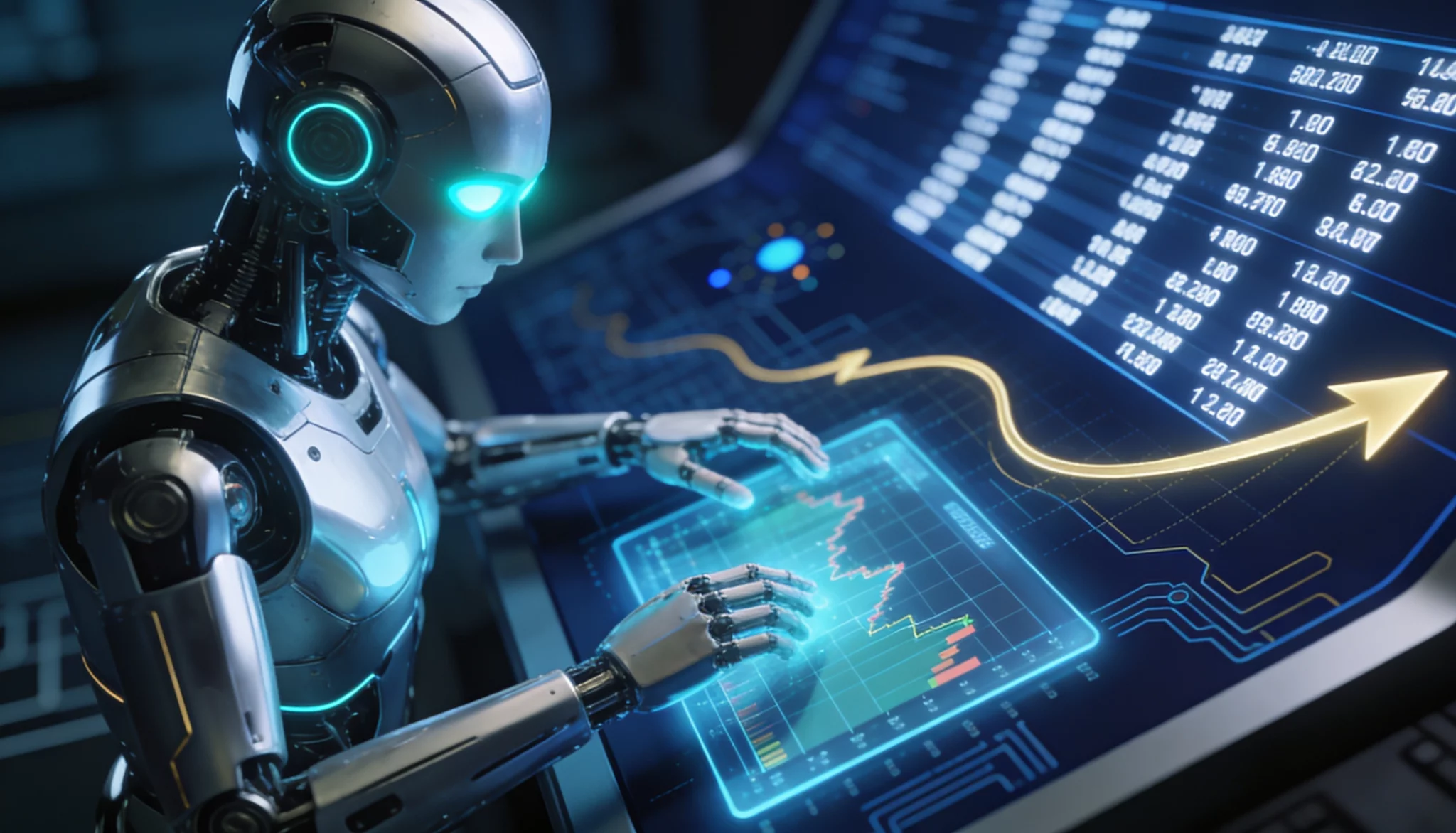
AI-powered trading platforms introduce a different approach.
Instead of relying only on fixed instructions, AI systems can analyze broader information, identify patterns, and provide additional decision support.
Modern AI trading platforms may evaluate:
- Historical price data
- Trading volume
- Market sentiment
- Economic conditions
- News information
- Asset behavior patterns
This allows traders to approach market analysis with more information and greater flexibility.
AI trading platform vs traditional trading bot
The difference between traditional trading bots and AI-powered platforms is mainly adaptability.
| Feature | Traditional Trading Bot | AI Trading Platform |
| Strategy | Fixed rules | Adaptive analysis |
| Data processing | Limited inputs | Multiple data sources |
| Market response | Rule-based reaction | AI-assisted evaluation |
| Strategy improvement | Manual updates | Data-driven optimization |
| Decision support | Automated execution | Analysis + automation |
Traditional bots are still useful for specific strategies.
However, AI trading platforms are designed to provide broader analytical capabilities.
The purpose is not to replace traders.
Instead, AI tools help traders spend less time collecting information and more time evaluating strategies.
How multi-agent AI systems work in trading
One of the most interesting developments in AI trading is the use of Multi-Agent AI Systems.
A multi-agent system allows multiple AI agents to work together, with each agent focusing on a specific responsibility.
Instead of one AI model handling every task, different AI agents can analyze different parts of the trading process.
This creates a workflow similar to that of a professional investment team.
Market analysis agent
The market analysis agent focuses on understanding market conditions.
It may analyze:
- Price trends
- Technical indicators
- Trading patterns
- Market movements
Its role is to identify relevant information that may influence trading decisions.
Risk management agent
The risk management agent evaluates potential risks.
It may monitor:
- Market volatility
- Portfolio exposure
- Position sizes
- Changing market conditions
A strong AI trading system should not only search for opportunities but also help users understand potential risks.
Strategy optimization agent
The strategy agent focuses on evaluating different trading approaches.
It can help analyze:
- Historical performance
- Strategy effectiveness
- Market conditions
- Potential improvements
Execution agent
The execution agent supports the operational side of trading.
This may include:
- Order management
- Trading automation
- Execution timing
- Workflow optimization
By combining these different functions, multi-agent AI systems create a more complete approach to automated trading.
AI crypto trading bots: How AI is changing digital asset trading
Cryptocurrency markets operate 24 hours a day, seven days a week.
This creates unique challenges for traders because market conditions can change quickly at any time.
AI crypto trading bots can assist users by analyzing:
- Bitcoin (BTC)
- Ethereum (ETH)
- Digital asset markets
- Trading volume
- Market sentiment
- Historical patterns
For example, a crypto trader monitoring Bitcoin volatility may use an AI trading platform to review price movements, market sentiment, and historical patterns before adjusting a strategy.
AI tools can help reduce manual monitoring requirements and provide faster access to market information.
However, AI crypto trading bots should not be viewed as automatic profit systems.
They are designed to support:
- Market analysis
- Trading automation
- Strategy evaluation
- Decision assistance
Market risk remains an important factor in any trading activity.
AI stock trading platforms: Supporting modern investors
AI is also becoming increasingly relevant in traditional stock markets.
AI stock trading platforms can help investors with:
- Company research
- Market trend analysis
- Portfolio monitoring
- Risk evaluation
For markets such as NASDAQ and the New York Stock Exchange (NYSE), AI tools are being explored as a way to improve research efficiency.
A trader researching a company may use AI tools to summarize financial information, analyze historical trends, and organize market data.
The value of AI is not replacing human judgment.
Instead, AI provides additional analytical support that helps investors make more informed decisions.
How to choose an AI trading platform in 2026
With more AI trading solutions entering the market, traders should evaluate platforms carefully.
A strong AI trading platform should provide more than automation.
1. Transparency
Users should understand:
- How AI strategies are created
- What information does the system analyze
- How decisions are generated
Transparent platforms help users make better-informed choices.
2. Risk management features
Risk control is one of the most important parts of trading.
Useful features may include:
- Position management
- Risk limits
- Portfolio monitoring
- Strategy evaluation
3. Automation and user control
Automation should simplify trading, not remove user control.
Important features include:
- Market monitoring
- Strategy assistance
- Automated workflows
- Custom settings
4. Security and reliability
Before using any AI trading platform, users should consider:
- Platform reputation
- Data protection
- Account security
- Operational reliability
What traders should know before using AI trading bots
AI trading technology provides powerful analytical tools, but traders should understand its limitations.
AI does not guarantee trading results
Financial markets remain unpredictable.
Factors such as:
- Economic changes
- Regulatory decisions
- Unexpected events
- Market sentiment
can influence asset prices.
AI can improve analysis, but it cannot eliminate market uncertainty.
Strategy quality still matters
The effectiveness of an AI trading system depends on:
- Data quality
- Strategy design
- Market conditions
- Risk controls
Users should evaluate AI platforms based on technology, transparency, and risk management rather than promises of guaranteed performance.
The future of AI trading platforms
AI trading technology is expected to continue developing.
Several trends may shape the future:
More specialized AI agents
Future trading systems may include dedicated AI agents focused on:
- Market research
- Risk analysis
- Strategy development
- Portfolio optimization
More intelligent automation
AI assistants may increasingly help traders:
- Summarize market conditions
- Monitor portfolios
- Identify important signals
- Support research
Stronger risk management
Future AI platforms will likely focus more on:
- Real-time monitoring
- Adaptive strategies
- Automated controls
The next stage of AI trading will likely focus on collaboration between human decision-making and intelligent technology.
Conclusion: AI trading is moving toward a more intelligent future
AI trading platforms are changing how investors analyze markets, evaluate strategies, and manage trading workflows.
From AI crypto trading bots to AI stock trading platforms, artificial intelligence is creating new opportunities for traders who want more efficient ways to process information.
Multi-Agent AI Systems represent an important development in this transformation.
By combining specialized AI agents for market analysis, risk management, strategy optimization, and execution, next-generation trading platforms are moving beyond simple automation.
For traders exploring AI-powered solutions in 2026, the most important considerations are not only technology and automation but also transparency, security, and responsible risk management.
AI will not replace every trading decision.
Instead, the future may be a closer partnership between human traders and intelligent AI systems.
Frequently asked questions (FAQ)
1. How do AI trading platforms use multi-agent AI systems?
AI trading platforms use multiple AI agents to handle different tasks, including market analysis, risk evaluation, strategy optimization, and trade execution. These agents work together to provide broader insights and support more efficient trading workflows.
2. Are AI crypto trading bots safe to use?
AI crypto trading bots can help traders analyze markets and automate certain processes. However, they cannot remove market risks or guarantee profits. Users should evaluate platform transparency, security, risk controls, and strategy performance before choosing a solution.
3. What should traders look for when choosing an AI trading platform in 2026?
Traders should evaluate AI capabilities, automation features, security, risk management tools, supported markets, and whether the platform allows users to maintain control over trading decisions.
Disclosure: This content is provided by a third party. Neither crypto.news nor the author of this article endorses any product mentioned on this page. Users should conduct their own research before taking any action related to the company.




Leave feedback about this