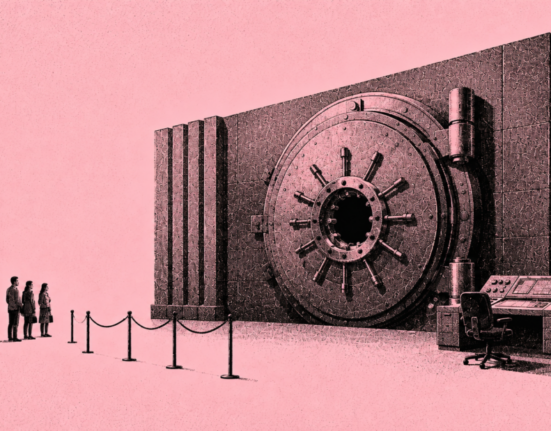
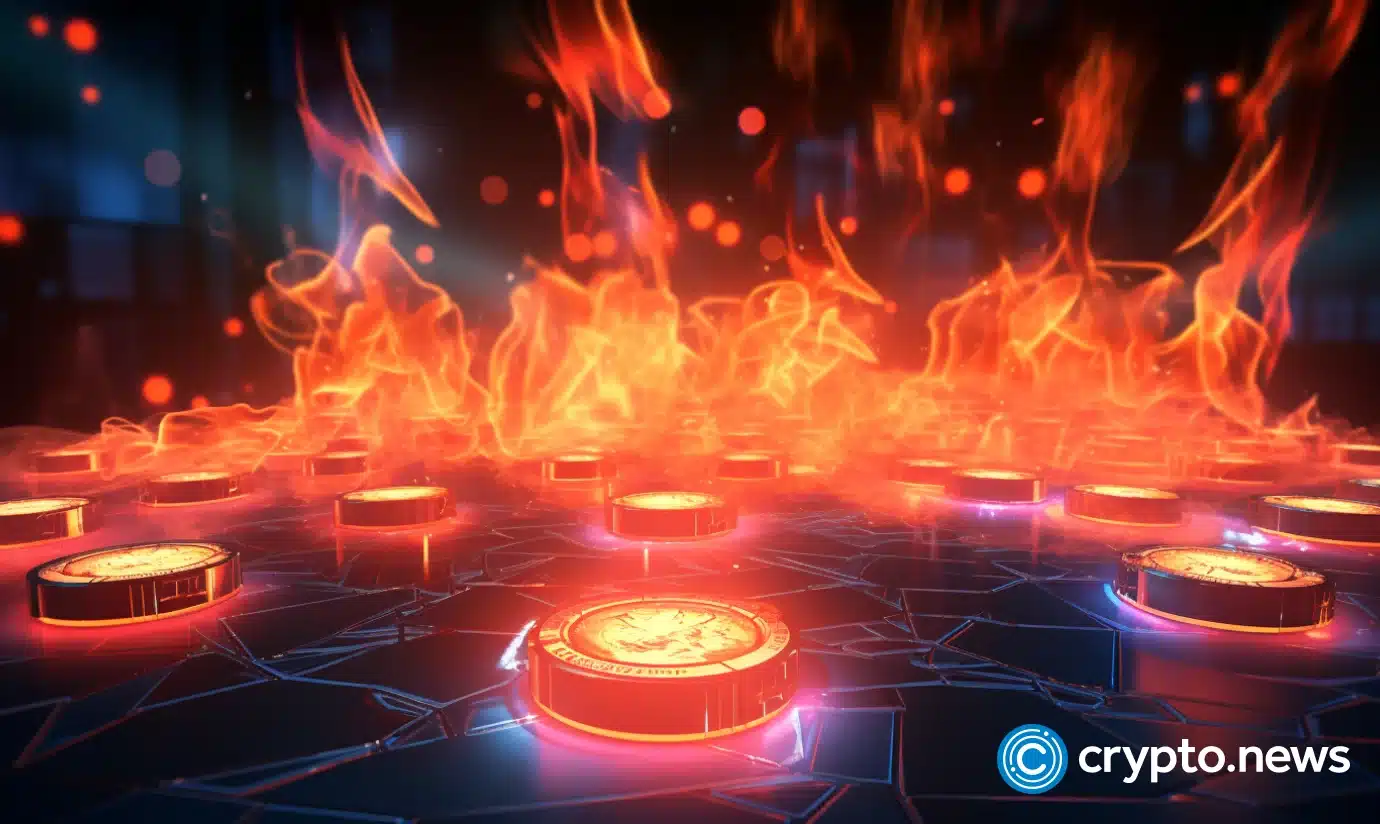

Burning a token means destroying it on purpose, sending it to an address no one can open. Paired with a buyback, it becomes one of the most common tools a crypto project uses to manage supply and defend its price.
Summary
- A token burn permanently removes coins from circulation by sending them to a burn address, a wallet with no private key that can receive tokens but never send them, making the destruction irreversible and verifiable on-chain.
- Buyback-and-burn combines two steps: a project uses revenue or reserves to buy its own token on the open market, then burns what it bought, converting earnings into a permanent supply cut.
- The goal is scarcity. Fewer tokens spread across the same or growing demand can support the price, though a burn does nothing on its own if demand falls faster than supply.
- The idea comes from stock buybacks in traditional finance, but with a key difference: repurchased shares are usually held and can be reissued, while burned tokens are gone forever.
- Burns can also mislead, since a team can send tokens to a wallet it controls and call it a burn, so verifying the burn address and the on-chain record matters more than the announcement.
A token burn is one of the simplest ideas in crypto and one of the most misunderstood.
At its core, burning means destroying tokens on purpose, taking them out of circulation for good. Projects do it to shrink supply, and shrinking supply, all else equal, is meant to support the value of what remains. When a burn is paired with a buyback, where the project spends money to buy its own token before destroying it, the combination becomes a recurring engine that turns revenue into scarcity. This guide explains how a burn actually works, what buyback-and-burn does, how it compares with a stock buyback, why projects use it, and where it can mislead.
What a token burn actually is
Start with the mechanics, because they are more literal than the word suggests.
Nothing is set on fire. A token burn is a transaction that sends tokens to a burn address, also called an eater address or a null address, which is a wallet designed so that tokens can go in but never come out. A normal wallet has a private key, the secret that authorizes moving its contents. A burn address has no known private key, so anything sent to it is locked forever. Common examples include addresses that end in a long string of zeros or the recognizable “dead” address on Ethereum-style chains, and the so-called blackhole address on the BNB Chain.
Because blockchains are public, every burn is visible and permanent. Anyone can look up a burn address, see exactly how many tokens have been sent to it, and confirm they have left circulation. That transparency is part of the appeal: a burn is a provable, irreversible reduction in supply, not a promise. Once the tokens arrive at the burn address, the maximum and circulating supply figures for the project drop accordingly, and no team, exchange, or court can reverse it.
The permanence is the whole point. A burn is a one-way door. That is what separates it from simply moving tokens to storage, and it is why the burn address matters so much: if the destination can ever send tokens back, it was never a real burn.
What buyback-and-burn adds
A plain burn destroys tokens the project already holds. Buyback-and-burn adds a first step that makes the mechanism self-sustaining: the project spends money to buy its own token on the open market, then sends what it bought to the burn address. The two actions together turn a stream of income into a steady, permanent supply cut.
The buyback half matters for two reasons. First, it creates real buy-side demand, since the project is competing with everyone else to purchase the token, which can support the price directly through the purchase itself. Second, it ties the supply reduction to the project’s actual performance, because the more revenue a protocol generates, the more it can buy and burn. A well-designed program scales with success: rising fees mean more tokens bought and destroyed, which tightens supply exactly when the network is growing.
The funding source is the detail that separates a durable program from a marketing stunt. Buybacks paid for out of genuine protocol revenue or fees are sustainable, because they draw on money the network actually earns. Buybacks paid from a treasury or from external fundraising are finite, because that reserve can run dry. When you evaluate a buyback-and-burn, the first question is always where the money comes from.
Buyback-and-burn versus a stock buyback
The concept is borrowed from traditional finance, where public companies repurchase their own shares, so the comparison is worth drawing precisely. In a stock buyback, a company buys its shares on the market and absorbs them, reducing the number outstanding. This lifts earnings per share and can support the price, and it is a familiar way to return capital to shareholders.
The crucial difference is what happens next. Repurchased shares are usually held in the company treasury, where they can be reissued later for compensation, acquisitions, or fresh capital raises. They are removed from the float, but not necessarily destroyed. A token burn goes further: the bought-back tokens are sent to the burn address and can never return. The supply cut is absolute, not a temporary parking of shares that management could undo.
There is a second difference around certainty. Corporate buybacks are discretionary, decided by management and subject to change, so investors cannot be sure a program will continue. Many crypto buyback-and-burn programs run on pre-programmed smart contracts, which execute automatically according to fixed rules, removing the discretion. When a burn is coded into the protocol, holders can verify it will happen instead of trusting that it will. That automation and permanence are what crypto added to the old idea.
Why projects burn tokens
The headline reason is supply and demand. If the number of tokens falls while demand stays flat or grows, basic economics points toward upward pressure on price, because the same value is spread across fewer units. A burn is a lever on the supply side of that equation, and projects reach for it to support the value of the tokens still in circulation.
There are other motivations layered on top. A burn is a signal: a team spending real money to buy and destroy its token communicates confidence and a commitment to holders, which can improve sentiment beyond the mechanical supply effect. Burns also offset inflation. Many tokens issue new supply continuously to reward validators, stakers, or liquidity providers, and a burn can counteract that issuance, keeping net supply flat or even negative so that the rewards do not dilute holders into the ground. A project that emits new tokens and burns an equal or greater amount can market itself as deflationary, which many investors prize.
Finally, burns can serve housekeeping purposes: removing unsold tokens after a sale, correcting an oversupply from an early distribution, or cleaning up tokenomics that were set too loose at launch. In each case the underlying logic is the same, which is to bring supply into a healthier relationship with demand.
A worked example
Numbers make the mechanism concrete. Imagine a project with a circulating supply of 1 billion tokens trading at $0.10, giving a market cap of $100 million. The protocol earns fees and commits a portion to buyback-and-burn. Over a quarter, it uses revenue to buy 100 million tokens on the open market and sends them all to the burn address.
Two things happen. During the quarter, the buying itself adds demand, which tends to support or lift the price as the program competes for tokens. After the burn, the circulating supply drops from 1 billion to 900 million, a 10% reduction. If demand and market cap held steady at $100 million, the price per token would rise from $0.10 to about $0.111, because the same total value now divides across fewer coins. If demand also grew over the period, the effect compounds.
The example also shows the limit. If, over that same quarter, holders lost confidence and demand fell so that the market cap dropped to $81 million, the price would sit near $0.09 even after the burn, lower than where it started. The burn cut supply by 10%, but demand fell further, and price follows the balance of the two. A burn improves the supply side; it cannot rescue a token whose demand is collapsing.
Types of burn programs
Not all burns are the same, and the distinctions matter when you assess one. The first split is burn versus treasury buyback. A buyback-and-burn destroys the repurchased tokens permanently. A treasury buyback purchases tokens on the market but keeps them in the project treasury, where they remain outstanding and could be redeployed for incentives or investment later. Only the burn permanently reduces supply; the treasury version reduces the float temporarily.
The second split is the funding source. Revenue-funded and fee-funded burns draw on money the protocol actually earns, so they scale with adoption and are the most sustainable. Treasury-funded and externally funded burns draw on finite reserves and cannot continue indefinitely. The third split is manual versus automatic. Manual burns are decided by a team or a governance vote, offering flexibility but requiring trust. Automatic burns run on smart contracts at fixed intervals or thresholds, offering predictability that holders can verify.
A fourth category worth separating out is the fee burn, where a protocol destroys a portion of every transaction fee instead of buying tokens back. This is a different mechanism from buyback-and-burn, since there is no purchase step, but it achieves a similar deflationary effect by removing tokens with each use of the network. Knowing which type you are looking at tells you how durable and how trustworthy the supply reduction really is.
Notable examples
The most cited program is the one that popularized the model. The largest exchange token runs a quarterly buyback-and-burn funded by a share of exchange profits, with a stated goal of shrinking its supply substantially over time, and each burn is documented and verifiable on-chain. It became the template that many other projects copied.
More recent designs push the mechanism further. Some trading platforms route the large majority of their protocol fees into an on-chain fund that continuously buys and burns the native token, so the burn is tied directly to real usage and scales automatically with volume. Meme tokens have run burn campaigns that destroy a set portion of profits or a fixed amount into a public burn wallet, using the burns partly as a community rallying point. And some base-layer networks burn a portion of every transaction fee at the protocol level, so that heavy network use can make the token deflationary during busy periods. Each of these illustrates a different funding source and trigger, but all rest on the same core idea of provable supply reduction.
When burns mislead
This is the part that matters most for protecting yourself, because a burn is easy to fake in appearance if not in substance. The most common trick is a team announcing a burn while sending tokens to a wallet it secretly controls rather than to a true burn address. Nothing is destroyed; the tokens are simply moved, and they can be sold later. Verifying that the destination is a genuine, keyless burn address, and not just an unfamiliar wallet, is the difference between a real burn and theater.
Burns can also be used to hide concentration. A project might burn tokens to make the remaining distribution look less concentrated, masking how much supply a few insiders still hold. And burns are sometimes deployed purely as marketing, timed to generate a price pop and attention rather than to reflect any sustainable program, with no revenue behind them and no plan to continue. A large one-time burn with no ongoing funding is a very different thing from a revenue-funded program that runs every quarter.
The deeper limitation is the one the worked example showed: scarcity is not value. Reducing supply supports price only if demand holds. A token with a shrinking supply and no users, no utility, and no demand will still decline because there is nothing on the other side of the equation. A burn is a tool, and like any tool it can be used well, used carelessly, or used to deceive. The on-chain record, the funding source, and the presence of real demand are what separate the three.
Burns versus locks and vesting
One of the most useful habits when you read tokenomics is separating a burn from the mechanisms that only look like supply reduction. A burn permanently removes tokens. A lockup and a vesting schedule do something very different: they delay when tokens reach the market without removing them at all. Confusing the three is a common way to misjudge how much real supply pressure a token faces.
A lockup holds tokens in a contract that releases them at a set time. Team allocations, investor allocations, and rewards are often locked for months or years, which keeps them out of circulation for now but not forever. When the lock ends, those tokens unlock and can be sold, adding supply exactly when the schedule dictates. Vesting is the same idea spread over time, releasing a locked allocation in steady increments instead of all at once. Neither reduces the eventual supply; both simply push it into the future. A token can look tight today and face heavy unlocks next quarter, and only reading the vesting schedule reveals it.
A burn is the opposite. The tokens are gone, so they can never unlock, never vest, and never hit the market. That permanence is why a burn and an unlock are worth watching together: a project might burn a headline number while a far larger allocation sits waiting to vest, so the net supply is still climbing. The burn grabs attention; the unlock schedule determines what actually happens to supply. A serious read of any token weighs burns against pending unlocks to see where net supply is heading, not just at the burned figure in isolation.
There is a further wrinkle around circulating versus total supply. A burn reduces both, since destroyed tokens leave the maximum forever. A lockup reduces circulating supply for now but leaves total supply unchanged, because the tokens still exist and will circulate later. Projects sometimes lean on the lower circulating figure to make a token look scarcer than it is, while a large locked allocation waits in the background.
Checking total supply and the unlock calendar alongside any burn is what keeps you from mistaking a delay for a reduction.
The practical takeaway is a short checklist. When a project touts a burn, confirm the tokens went to a real burn address, find the funding source behind it, and then look at what is locked and vesting on the other side of the ledger. A revenue-funded burn running against a light unlock schedule is a genuinely tightening supply. A one-time burn running against heavy upcoming unlocks is a headline masking the opposite. The burn is only half the picture, and the locks and vesting are the half that projects prefer you skip.
Frequently Asked Questions
What does it mean to burn a token?
Burning a token means permanently removing it from circulation by sending it to a burn address, a wallet with no private key that can receive tokens but never send them. Because the address cannot be opened, the tokens are locked forever. Every burn is recorded on the blockchain, so anyone can verify that the supply has been reduced.
What is a burn address?
A burn address, also called an eater or null address, is a wallet with no known private key. Normal wallets use a private key to authorize moving funds, but a burn address lacks one, so any tokens sent to it can never be moved again. Common examples include addresses ending in many zeros or a recognizable “dead” address, and the blackhole address on some chains.
How does buyback-and-burn work?
Buyback-and-burn is a two-step process. First, the project uses revenue or reserves to buy its own token on the open market, which adds real buying demand. Second, it sends the tokens it bought to a burn address, permanently reducing supply. Together, the steps convert the project’s income into a lasting supply cut that scales with how much revenue it generates.
How is a token burn different from a stock buyback?
A stock buyback repurchases shares and usually holds them in the company treasury, where they can be reissued later, so the reduction can be temporary. A token burn destroys the tokens at a burn address, making the supply cut permanent and irreversible. Many crypto burns also run automatically on smart contracts, while corporate buybacks are discretionary decisions by management.
Does burning tokens always raise the price?
No. A burn reduces supply, which can support the price if demand holds or grows, but it cannot lift a token whose demand is falling. If confidence drops and demand declines faster than supply, the price can fall even after a large burn. Scarcity supports value only when there is real demand on the other side of the equation.
Why do projects burn their own tokens?
Projects burn tokens to support price through scarcity, to signal confidence and commitment to holders, and to offset the new supply issued as staking or liquidity rewards, keeping the token from inflating. Burns are also used for housekeeping, such as removing unsold tokens after a sale or correcting an oversupply set at launch. The common goal is a healthier balance between supply and demand.
Can a token burn be faked?
Yes. A team can announce a burn while sending tokens to a wallet it secretly controls instead of a true burn address, so nothing is actually destroyed and the tokens can be sold later. Burns can also mask holder concentration or serve purely as marketing to spark a price pop. Verifying that the destination is a genuine keyless burn address on-chain is essential.
What is the difference between buyback-and-burn and a fee burn?
Buyback-and-burn has a purchase step: the project buys tokens on the market, then destroys them, using revenue or reserves. A fee burn has no purchase step; instead, the protocol destroys a portion of every transaction fee automatically as the network is used. Both reduce supply, but the fee burn scales directly with network activity rather than with a funded buyback program.
Disclaimer: This article is for information and educational purposes only and does not constitute financial, investment, or trading advice. Cryptocurrency prices are volatile, and mechanisms such as token burns do not guarantee any price outcome. Nothing here is a recommendation to buy or sell any asset. Always do your own research and consider consulting a licensed professional before making financial decisions.
Information is accurate as of July 1, 2026, and may change.