

Bitcoin has fallen more than 50% from its $125,000 cycle peak, but Grayscale’s Zach Pandl has argued that the cryptocurrency may have already reached its bottom if the Federal Reserve stops raising interest rates.
Summary
- Zach Pandl says Bitcoin may have bottomed if the Fed ends rate hikes and economic growth remains stable.
- Grayscale sees the CLARITY Act, Fed policy, and Strategy’s finances as key factors for Bitcoin.
- Strategy’s $216 million Bitcoin sale strengthened its cash reserve and reduced concerns about forced selling.
Grayscale Research has presented two competing views of when the current Bitcoin bear market could end, with one based on the asset’s four-year cycle and the other tied to economic growth, real interest rates and Fed policy.
Pandl, Grayscale’s head of research, favors the second explanation because Bitcoin has increasingly behaved like a mature asset affected by the same macroeconomic forces that influence other major markets. Under that view, stable growth and an end to rate hikes could allow Bitcoin’s latest low to hold.
The cycle-based model offers a less favorable timeline. According to Grayscale, Bitcoin has historically reached a bottom about one year after its cycle peak and roughly two and a half years after each halving. Previous bear markets have also produced average drawdowns of around 80%.
Following that pattern, Grayscale’s analysis indicates that Bitcoin could face more selling before forming a low in September or October. An 80% decline from the latest cycle peak would also leave the asset well below the levels reached during its recent fall under $60,000.
Grayscale does not expect the current downturn to match those earlier losses, however, because institutional participation has remained stronger than in past cycles. The asset manager believes Bitcoin’s expanding role in investment portfolios has made macro conditions more useful than halving history when assessing the market.
Fed policy may determine whether Bitcoin’s low holds
According to Pandl, previous Bitcoin bear markets often coincided with slowing economic growth or rising real interest rates. The current decline has also unfolded as investors priced in the possibility of more Fed tightening and real borrowing costs moved higher.
If policymakers finish raising rates while economic activity remains stable, Pandl believes Bitcoin may not need another major decline to complete its bear market. A renewed increase in borrowing costs would weaken that case, particularly if persistent inflation forces the Fed to keep policy restrictive.
Grayscale made a similar argument in a June market note that identified Fed policy as one of three conditions affecting Bitcoin’s chances of securing a cycle low. The other two involved progress on the CLARITY Act and an improvement in Strategy’s financial position.
Its base case assumed that the digital asset market structure bill would pass the Senate, Strategy would strengthen its balance sheet, and the Fed would avoid additional rate hikes. Grayscale warned that a failure across those areas could extend pressure on Bitcoin.
“If downside risks materialize, we could see bitcoin fall moderately further,” Pandl said.
Explaining that weaker outcome, Pandl pointed to the possibility that the CLARITY Act could fail to pass this year, digital asset treasury companies could continue deleveraging, and the Fed could raise rates because inflation remains elevated.
The CLARITY Act would establish a federal market structure for digital assets and provide rules for exchanges, developers and token issuers. According to the Senate update cited in an earlier report, the bill reached the Senate calendar after committee approval but still required floor debate, possible amendments and 60 votes.
Bitcoin’s fall below $60,000 added urgency to those risks. Previous crypto.news analysis found that spot exchange-traded fund outflows and leveraged liquidations intensified the selloff as traders tried to defend the $60,000 area.
Strategy’s cash reserve has reduced a key market risk
Since Grayscale published its June assessment, Strategy has taken steps that the asset manager views as supportive for the company’s finances and Bitcoin’s price structure.
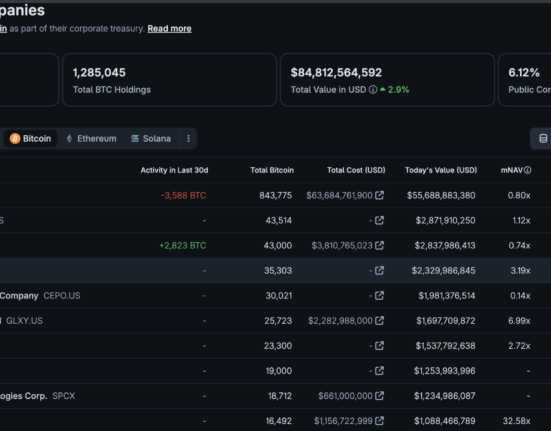
A July 6 Grayscale Research report examined Strategy’s decision to sell 3,588 Bitcoin for about $216 million. Rather than treating the transaction as evidence of financial distress, Grayscale argued that the sale strengthened the company’s balance sheet and lowered financing pressure.
Strategy used the proceeds to meet preferred-share dividend obligations and replenish its dollar reserve. According to Grayscale, the transaction lifted that reserve to about $2.55 billion, providing enough cash to cover nearly 17 months of dividend payments under the obligations in place at the time.
Pandl wrote that Strategy’s financing structure remained well supported despite concerns from some market participants. Grayscale also argued that the larger cash buffer reduced the chance that the company would need emergency funding or additional Bitcoin sales during severe market volatility.
Under Strategy’s updated treasury framework, the company may issue shares or sell Bitcoin when needed to maintain enough dollars for dividends. Grayscale believes that policy gives the company more room to manage its obligations and removes some uncertainty surrounding its capital structure.
The announcement initially pushed Bitcoin toward $61,000 before the cryptocurrency recovered above $63,000. Grayscale interpreted the improved cash position as a factor that could help Bitcoin establish a more durable floor by reducing fears about forced selling from its largest corporate holder.
Pandl’s macro-based outlook still depends on conditions that have not been fully resolved. Grayscale’s assessment leaves the current low vulnerable if inflation triggers another Fed hike, economic growth deteriorates or policy progress stalls, while stable growth and unchanged rates would support the case that Bitcoin’s bottom is already in place.