
Bitcoin whales from the oldest cohort booked $297.3 million in losses on July 14, the second-worst day of the cycle. New data shows who is really selling.
Something gave way on July 14. The wallets that sat still through every crash since late 2025, the ones traders treat as furniture, sold Bitcoin at a loss.
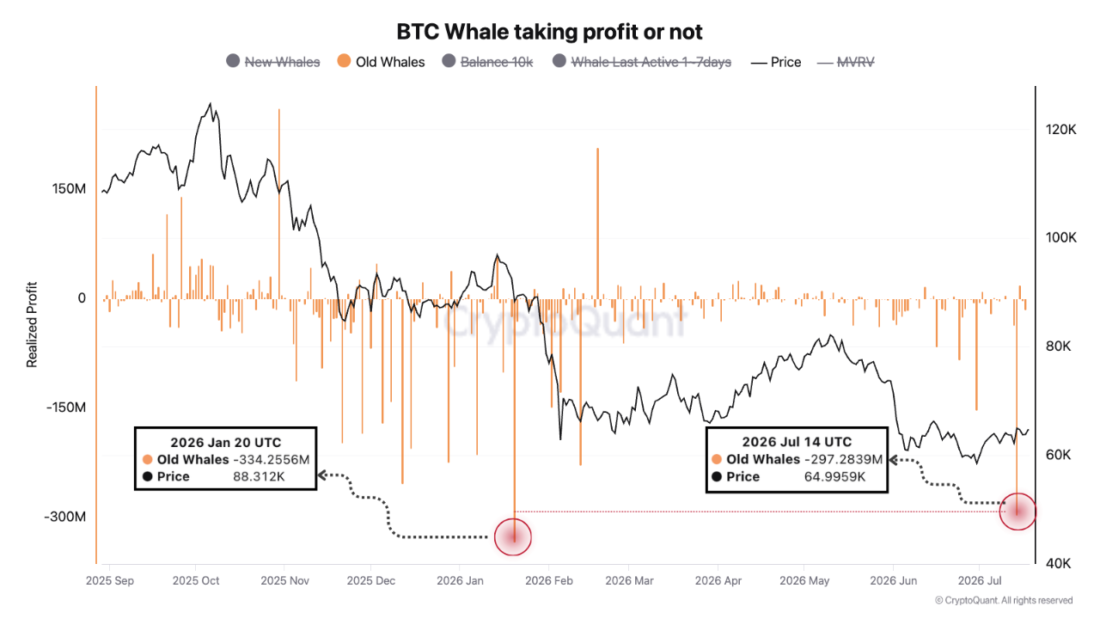
Bitcoin’s old whales realized roughly $297.3 million in losses that day. On-chain analyst MorenoDV_ flagged the print in a CryptoQuant QuickTake published Saturday, calling it the cohort’s second-largest daily negative reading since September 2025.
Only one day this cycle was worse.
The January Ghost Nobody Wants Back
Old whales are supposed to be the patient money. Their coins have sat unmoved for years, some dating back to prior cycles entirely, backed by enough cushion to ride out drawdowns that wreck everyone else. When holders like that start booking losses at this scale, the pain has reached a deeper layer of Bitcoin ownership.
That worse day came on January 20. What followed was one of the sharpest capitulation stretches of the current bear market, and it started from much higher prices. The chart marks both events in red, two lonely spikes in almost a year of data.

Source: CryptoQuant QuickTake by MorenoDV_ — cryptoquant.com
Who Is Actually Doing the Selling
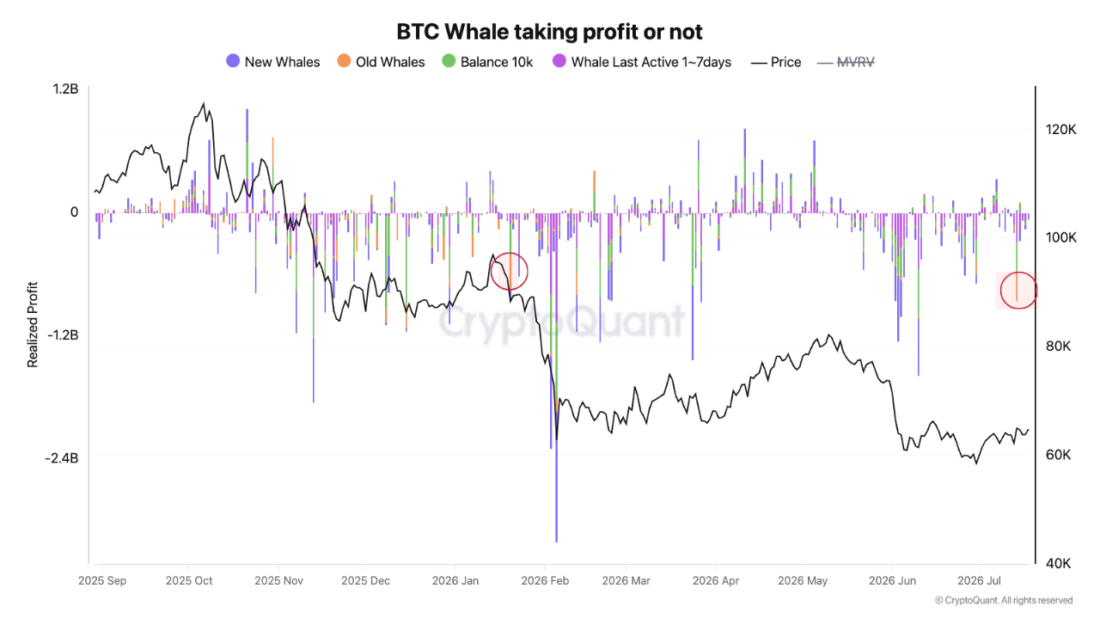
Here is the strange part, and it changes how the whole event reads. The old whales are not even the main sellers.
New whales, recently active wallets and the 10K-balance group have surrendered far larger sums through this downturn, sometimes billions of dollars at a time. Miners sit under the same kind of stress, with miner capitulation accelerating fast enough to flash its own bear market signal this week.
Against that backdrop, 297 million dollars looks almost contained. Old whales are joining the capitulation, the data shows, but they are not leading it. The heaviest pressure keeps coming from newer, jumpier capital.
Source: CryptoQuant, whale cohort realized profit and loss — cryptoquant.com
What Would Confirm a Bottom
BTC changed hands near $65,000 when the July 14 print landed. January’s $334.3 million loss day, by comparison, hit with the coin near 88,300 dollars.
MorenoDV_ lays out three conditions before any of this reads as a floor. Old-whale losses need to fade. The wider whale complex has to shrink its loss realization, and price must absorb the surrendered supply without printing new lows. Whale watchers ran similar logic on Ethereum’s fight to hold $1,780 this week.
One extreme print does not confirm a bottom, though.
Stronger Hands or Another Leg Down
Coins surrendered in panic can turn constructive later, if they end up in stronger hands. Can, not will. Absorption is the whole game now.
If these loss spikes start clustering while Bitcoin loses its current range, the analyst warns, the signal points to another stage of capitulation rather than the end of one. Nothing about the July print settles that question on its own.
This article covers on-chain data and analyst commentary. It is not financial or investment advice.