

The Bank of Russia has identified cryptocurrency use as a financial market risk, warning that stablecoins and other digital assets could increasingly be used by Russians as substitutes for the national currency.
Summary
- Bank of Russia has warned that stablecoins and other digital assets could increasingly be used as substitutes for the ruble.
- The regulator said crypto investments carry a risk of complete losses and raised concerns over anonymous and decentralized transactions.
- Unlicensed crypto operators could face criminal liability, while regulated firms that break market rules could face administrative penalties.
- Rosfinmonitoring has gained authority to oversee crypto transactions, while clients of Russian digital depositories will be required to provide their tax identification numbers.
The central bank outlined the concerns in its review, “Main Directions for the Development of the Financial Market of the Russian Federation for 2027 and the Period of 2028 and 2029,” where it warned about potential losses for investors and risks tied to crypto activity outside national jurisdictions.
Bank of Russia sees stablecoins as a risk to the ruble
The regulator said increased use of digital currencies, particularly stablecoins, could lead households to use privately issued assets in place of the ruble. Investments in cryptocurrencies carry the possibility of a complete loss of invested funds, according to the central bank.
Unlike traditional financial instruments, what the regulator described as “money surrogates” may lack an obligated counterparty or underlying collateral. Investors could therefore have no party against which to make a claim if the value of an asset collapses.
Some cryptocurrencies create another area of concern because transactions can take place through decentralized networks while providing varying degrees of anonymity, the central bank said. It linked those characteristics to increased risks of digital currencies being used for illegal activity.
Crypto markets operating across borders can limit the effectiveness of restrictions imposed by individual governments, according to the review. Countries have taken different approaches to regulating the sector, with some already applying strict requirements while others are still developing their rules.
The Bank of Russia said the lack of a uniform international approach could create conditions for an unregulated segment of the market to develop, leaving measures introduced by individual countries insufficient to contain some of the risks it identified.
The warning comes shortly after Russia opened a regulated domestic cryptocurrency market under central bank supervision.
Russia’s first comprehensive framework for crypto trading, custody and cross-border settlements took effect Sept. 1, allowing investors to access approved digital assets through regulated intermediaries. crypto.news previously reported that non-qualified investors can purchase up to 300,000 rubles of eligible cryptocurrencies annually through each intermediary after completing a required test.
Qualified investors can trade without the same purchase ceiling, although testing requirements remain in place.
Crypto exchanges face criminal and administrative liability
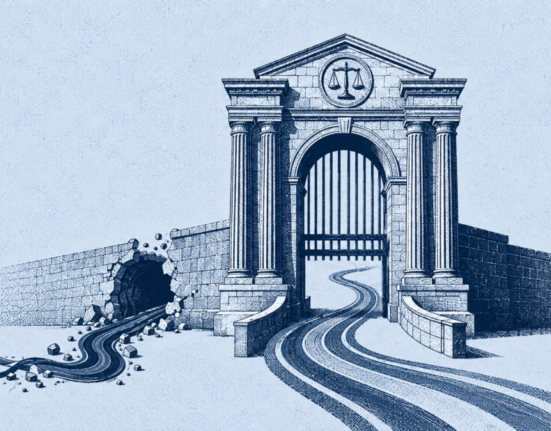
The Bank of Russia wants cryptocurrency activity to remain within the licensed market established under the new framework.
The regulator has called for criminal liability for operators that organize digital currency circulation without regulatory authorization. Licensed market participants that violate applicable rules should face administrative liability, according to the central bank.
Russia had already established a licensing structure for crypto intermediaries before the latest warning. Draft regulations published in July set requirements for cryptocurrency exchanges and digital depositories while placing registered market participants under central bank oversight.
Those draft operating rules included capital requirements for digital depositories and provisions allowing exchanges to establish their own trading procedures within the regulatory framework. The Bank of Russia would maintain official registers covering licensed crypto market participants.
President Vladimir Putin signed the underlying digital asset law on Aug. 4 after the State Duma approved the legislation in July. The law established regulated access for retail and qualified investors while keeping cryptocurrency payments for goods and services prohibited within Russia.
Before the market opened, the central bank proposed Bitcoin, Ether and USDT for trading on regulated exchanges. The proposal placed non-qualified investors under the 300,000-ruble annual purchase ceiling through each intermediary, while qualified investors could trade eligible cryptocurrencies without the same limit after meeting the required conditions.
Russia continues to permit cryptocurrency for certain cross-border transactions even as domestic payments remain restricted.
Russia expands monitoring of crypto transactions
Financial monitoring forms another part of the regulated market, with Rosfinmonitoring gaining authority to oversee cryptocurrency transactions under the legislation governing digital currencies and digital rights.
Identity requirements for digital depositories have been tightened as part of that system. Clients opening accounts with Russian digital depositories will be required to provide their individual taxpayer identification number, known as an INN.
The identifier is intended to make transactions easier to connect with specific market participants. Rosfinmonitoring adviser Vlada Gracheva said the requirement would improve transparency around cryptocurrency transactions.
Russia made the INN mandatory for digital depository accounts as authorities expanded anti-money laundering controls around the newly regulated market. Transactions exceeding 60,000 rubles are subject to requirements for detailed information about the payer and recipient.
Regulators have been building monitoring systems alongside the licensing framework. In August, the Bank of Russia blacklisted 2,600 crypto wallets connected to suspected illegal financial activity after more than 1 billion rubles flowed into the addresses during the first half of 2026.
The regulator identified 929 entities showing signs of financial pyramid activity during the period and another 379 suspected of illegally attracting investments. More than 74% of the pyramid schemes identified by the central bank used cryptocurrencies to attract funds.
Hundreds of complaints involved so-called crypto loans, where borrowers were offered loans denominated in USDT or rubles converted at a specified exchange rate. Authorities responded by blocking websites associated with some of the operations, while information on flagged crypto wallets was made available for use by banks and law enforcement agencies.