Gemini, Bitget & Neyro lead agentic AI trading push as market forecast hits $139B by 2034, bringing autonomous agents into crypto & DeFi infrastructure.
Summary
- Gemini, Bitget and Neyro are spearheading an “agentic trading” push that brings autonomous AI agents directly into crypto and DeFi infrastructure.
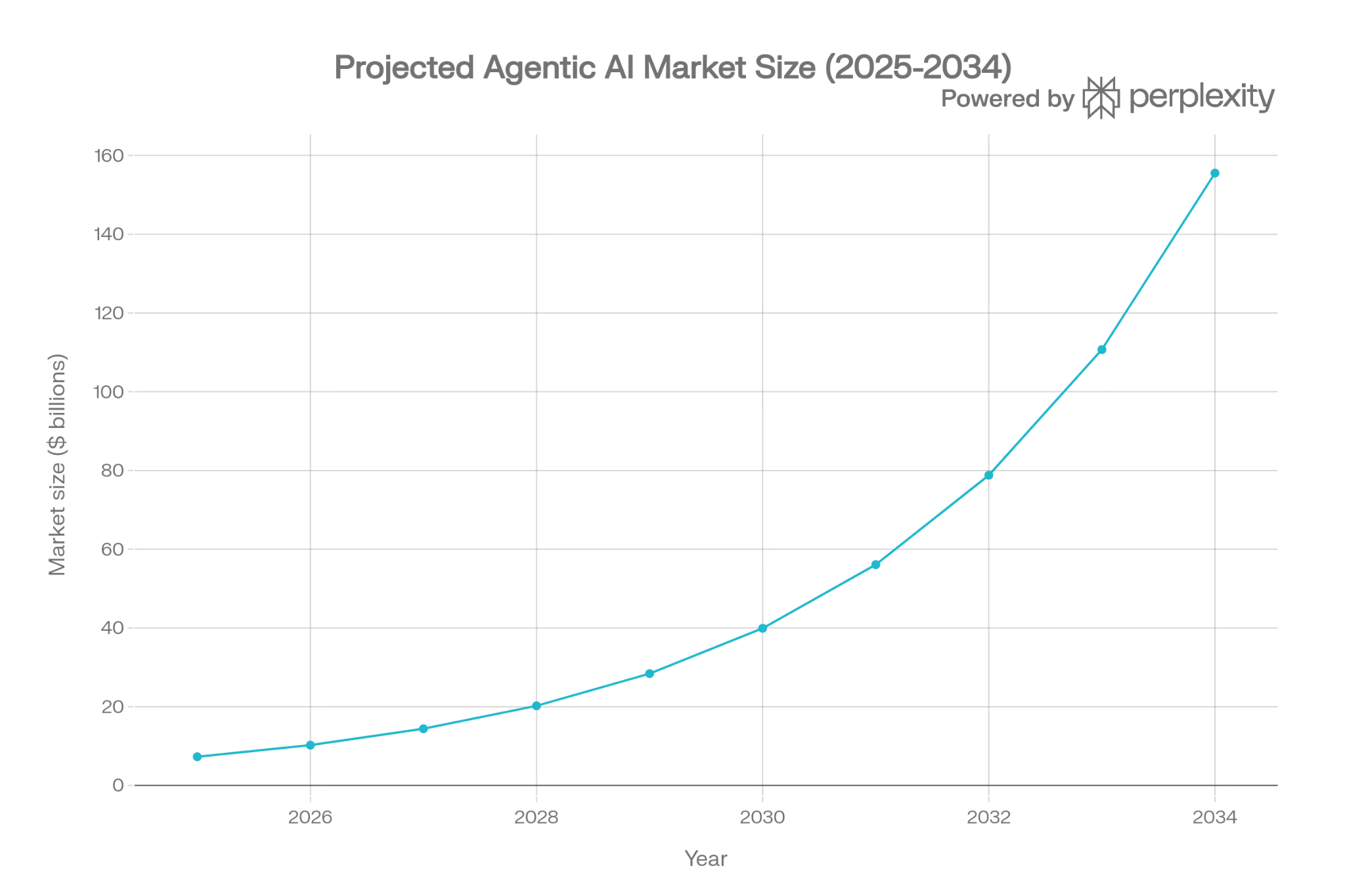
- The agentic AI market was worth $7.29 billion in 2025 and is forecast to reach $139.19 billion by 2034, implying a 40.5% CAGR as AI-native systems move from enterprise automation into financial markets.
- Neyro, built in the Aurum ecosystem, is positioning a non‑custodial, on‑chain model for AI agents, aiming to marry autonomous trading with DeFi’s core principles of self-custody and transparency.
Agentic AI are systems that do not just classify data but monitor environments, make decisions and take actions, they are starting to move from back‑office automation into live financial markets.
Agentic AI leaves the back office and hits trading screens
According to a Fortune Business Insights report, the agentic AI market was valued at $7.29 billion in 2025 and is projected to reach $139.19 billion by 2034, a compound annual growth rate of 40.5%. MarketsandMarkets, in turn, estimates that agentic AI SaaS could grow at a 46.8% CAGR through 2032 as enterprises retool around AI‑native infrastructure, a trajectory that parallels how cloud transformed IT budgets a decade ago.

In crypto, that shift is increasingly visible in trading rather than just productivity tools. A recent crypto.news story on DeFi passive income already described how bots and automated vaults now manage billions in user deposits, while another story on AI-driven fraud highlighted how the same technologies are used to attack and defend centralized platforms. The new wave, branded as “agentic trading,” goes a step further: AI agents that understand natural language, monitor markets in real time, and interact with exchanges or DeFi protocols without a human sitting on the glass all day.
Gemini, Bitget and Neyro push agentic trading in different directions
On the centralized side, Gemini recently rolled out Agentic Trading, wiring large language models such as Claude and ChatGPT into its exchange via the Model Context Protocol (MCP). As Decrypt reported, the feature lets users instruct AI agents in plain English — for example, to rebalance into majors when volatility spikes or to fade funding extremes — and have those agents call Gemini APIs directly to place and manage orders within preset limits.
Bitget has followed a similar logic with its Agent Hub, which it expanded earlier this year through a partnership with automation platform Mulerun. In a release covered by Bitcoin.com, the exchange framed the move as “advancing agentic trading” by letting users deploy and share AI-driven strategies that execute on Bitget’s own infrastructure, blurring the line between copy‑trading, bots and fully autonomous agents. A separate
crypto.news story on derivatives venue Hyperliquid shows how deep liquidity and composable perps are increasingly being treated as raw material for these kinds of automated strategies.
NEYRO, by contrast, is trying to keep agentic trading inside DeFi’s non‑custodial ethos. Launched within the Aurum ecosystem, Neyro combines AI‑driven trading agents with on‑chain execution logic so that “users retain control over their assets as if they never left the wallet,” rather than parking collateral in a centralized black box. In comments shared at an Aurum community event and later picked up by Cointelegraph, newly appointed Aurum Foundation COO Andrew Isaacs said, “Our real strength is the trading intelligence behind the agents — combining scalable AI-driven execution with non-custodial infrastructure,” adding that the goal is “building systems that can scale sustainably while continuously generating opportunities through advanced trading algorithms.”
Isaacs, who joined Aurum in January 2026 after almost two decades in banking and digital assets at firms including Galaxy Digital and Morgan Stanley, where he worked on more than $23 billion in executed transactions, has also argued that agentic AI will reshape how stablecoins are used. In a post highlighted by Cointelegraph, he suggested that “the next wave of stablecoin adoption could be driven by AI agents managing deposits and interacting directly with non-custodial wallets,” effectively turning bots into primary users of on‑chain dollars rather than just tools that sit behind human traders.
Where AI and crypto cycles now intersect
What ties Gemini, Bitget and Neyro together is the idea that AI agents will sit one layer above today’s trading front ends. Instead of manually reacting to markets, users set strategy parameters, risk limits and allocation logic, and then let agents watch order books, funding rates and on‑chain flows 24/7, executing only when conditions match the pre‑defined playbook. In Neyro’s design, that execution happens via smart contracts on DEXes and derivatives venues — including order‑book protocols like Hyperliquid — while preserving self‑custody, a trade‑off meant to avoid the centralization drift that has accompanied many early “AI trading” products.
Visually, the convergence looks like two curves crossing: traditional crypto market cap growth flattening into a more cyclical pattern, while agentic AI’s projected 40.5% annual growth line climbs from $7.29 billion toward $139.19 billion over the next decade. Charts comparing AI-sector valuations to crypto total value locked already show AI-related tokens and infrastructure projects taking a larger slice of risk capital, a trend crypto.news has flagged in recent predictions about where the next structural narrative may come from.
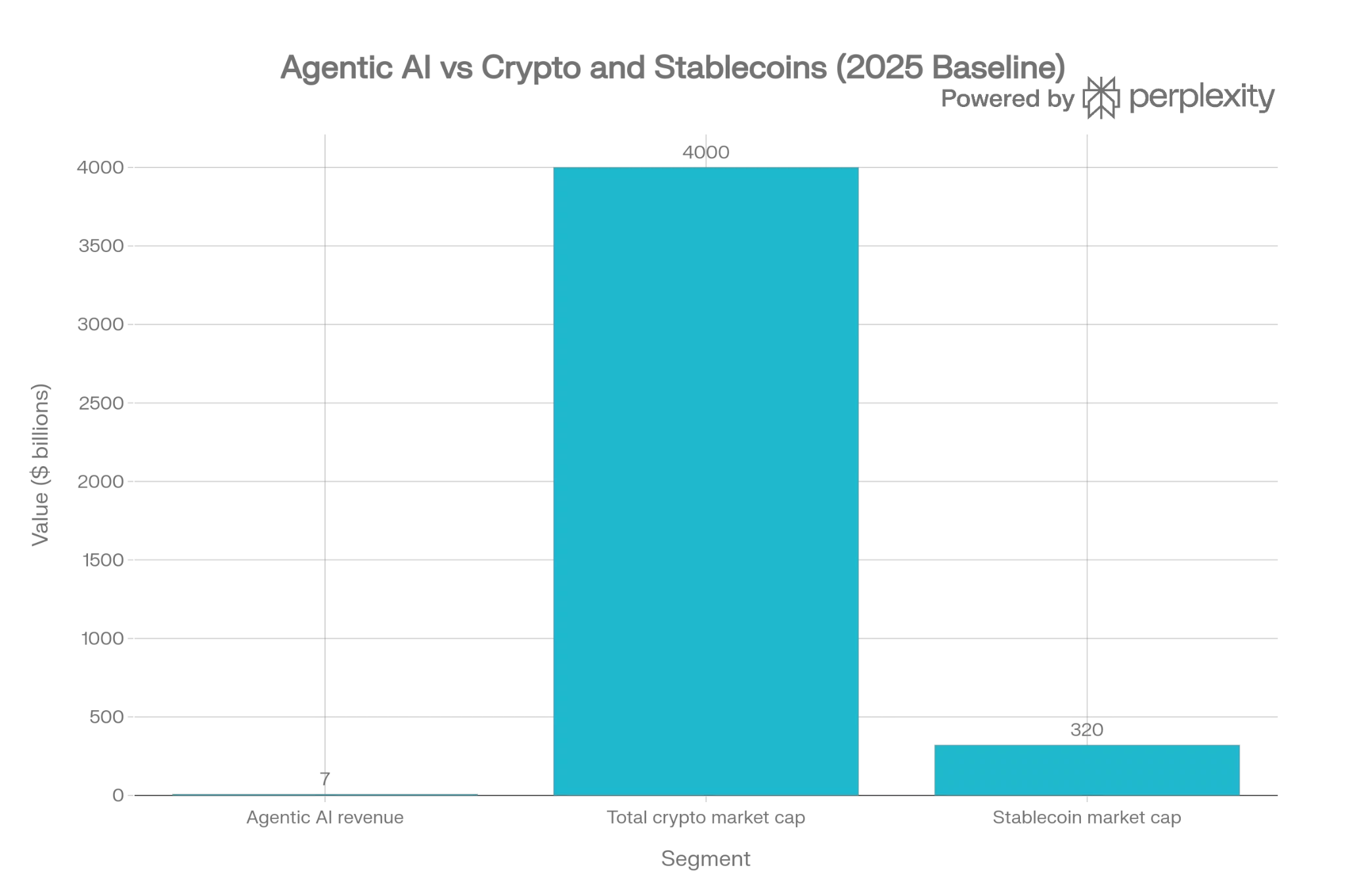
If that arc holds, agentic AI will not just sit adjacent to crypto; it will increasingly live inside it, as bots become the dominant marginal users of block space, stablecoins and derivatives liquidity. In that world, platforms like Gemini and Bitget will compete on how safely and flexibly they expose their order books to agents, while projects such as Neyro will test whether DeFi can absorb autonomous trading without giving up its core promise that control of assets, and the rules governing them, remain on-chain and user‑owned.